先に明かす。 2026年5月にこの雑誌は、父の作業ノートを受け継いだ話を載せた。この現場は特定の作業場ではない。 実際にそう回っている形をそのまま構成し、どこかは明かさない。以下はその形どおりに自分で作ったものであり、ノートの内容は作り物だ。
受け継いだ記録の難しさは読むことではない。誰がいつ知ったのかが分からないということだ。
「梅雨時は三番バルブを半回転緩める」という行があるとしよう。この行の値打ちは誰が書いたかによって全く変わる。 その機械を二十年回した人が書いたなら金の塊であり、アルバイトがマニュアルから写したものなら確認すべきものだ。
紙のノートはそれを区別してくれない。そしてもっと悪いことが起きる — 誤りと分かれば消す。
訂正は削除ではない
この道具がやることの全部と言ってもいい。
/// The id of the line this one corrects, if any. A correction never deletes.
final int? supersedes;
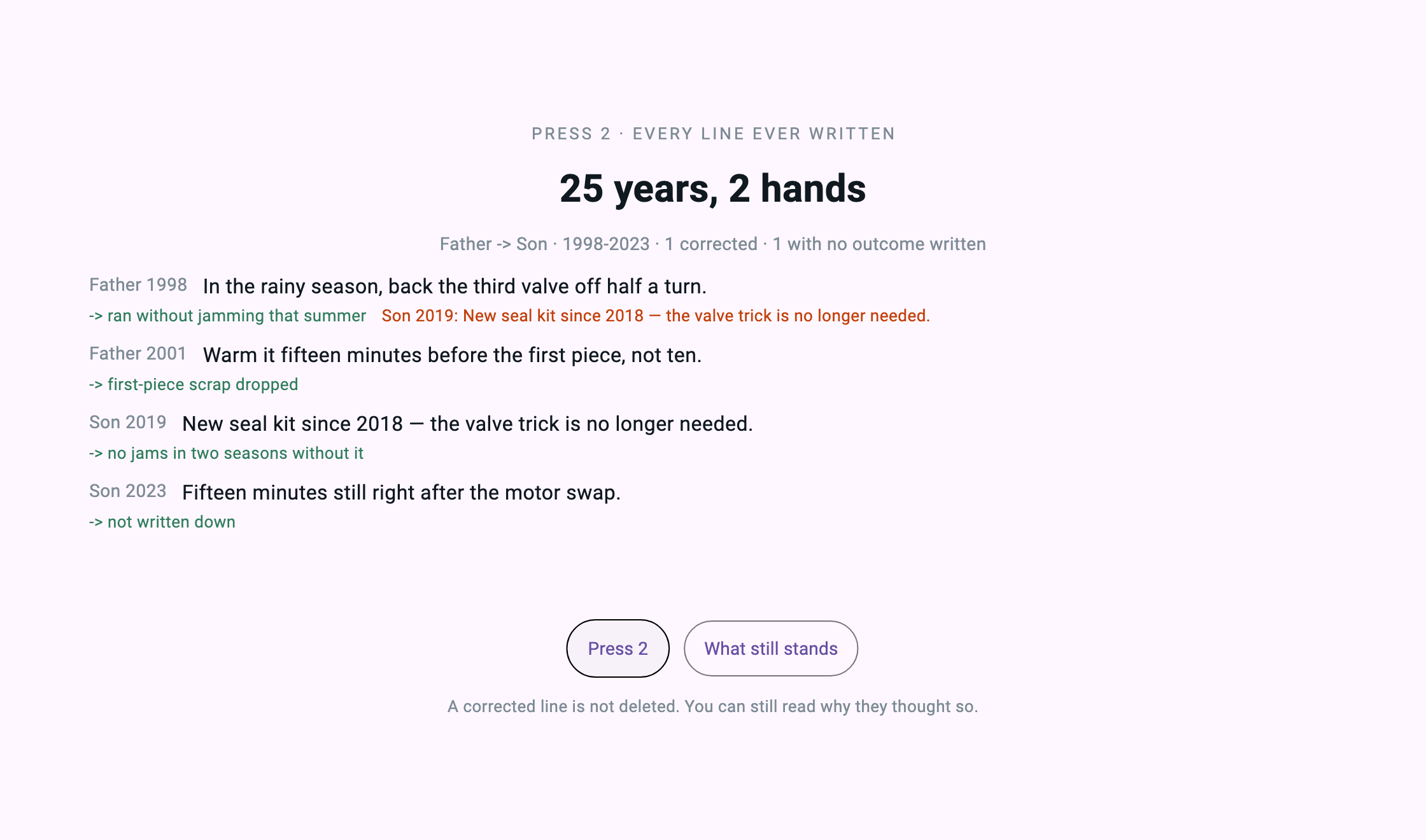
実際にどう見えるかがログにある。
Father 1998: In the rainy season, back the third valve off half a turn.
             -> ran without jamming that summer
             [corrected by Son 2019: New seal kit since 2018 — the valve trick is no longer needed.]
Father 2001: Warm it fifteen minutes before the first piece, not ten.
             -> first-piece scrap dropped
Son 2019:    New seal kit since 2018 — the valve trick is no longer needed.
             -> no jams in two seasons without it
Son 2023:    Fifteen minutes still right after the motor swap.
-> not written down1998年の行が依然としてそこにある。 2019年にシールキットが変わって不要になったという注記が横に付いただけだ。
なぜ残すのか。誤った行ではなく、そのときは正しかった行だからだ。1998年にそのバルブを半回転緩めるのは正しく、その判断がなぜ正しかったのかを消せば、次の人はシールキットがまた変わったときに何の根拠もなくやり直すことになる。
// A corrected line keeps its text and gains a pointer. It never
// disappears — the previous owner's reasoning stays readable.
隠すことと消すことは違う
とはいえ毎回すべての古い行を見る必要はない。だから画面が二つある。
全体画面はその機械について書かれたすべての行を見せる。訂正された行も訂正表示を付けたままそこにある。
いま有効なものの画面は訂正された行を外す。
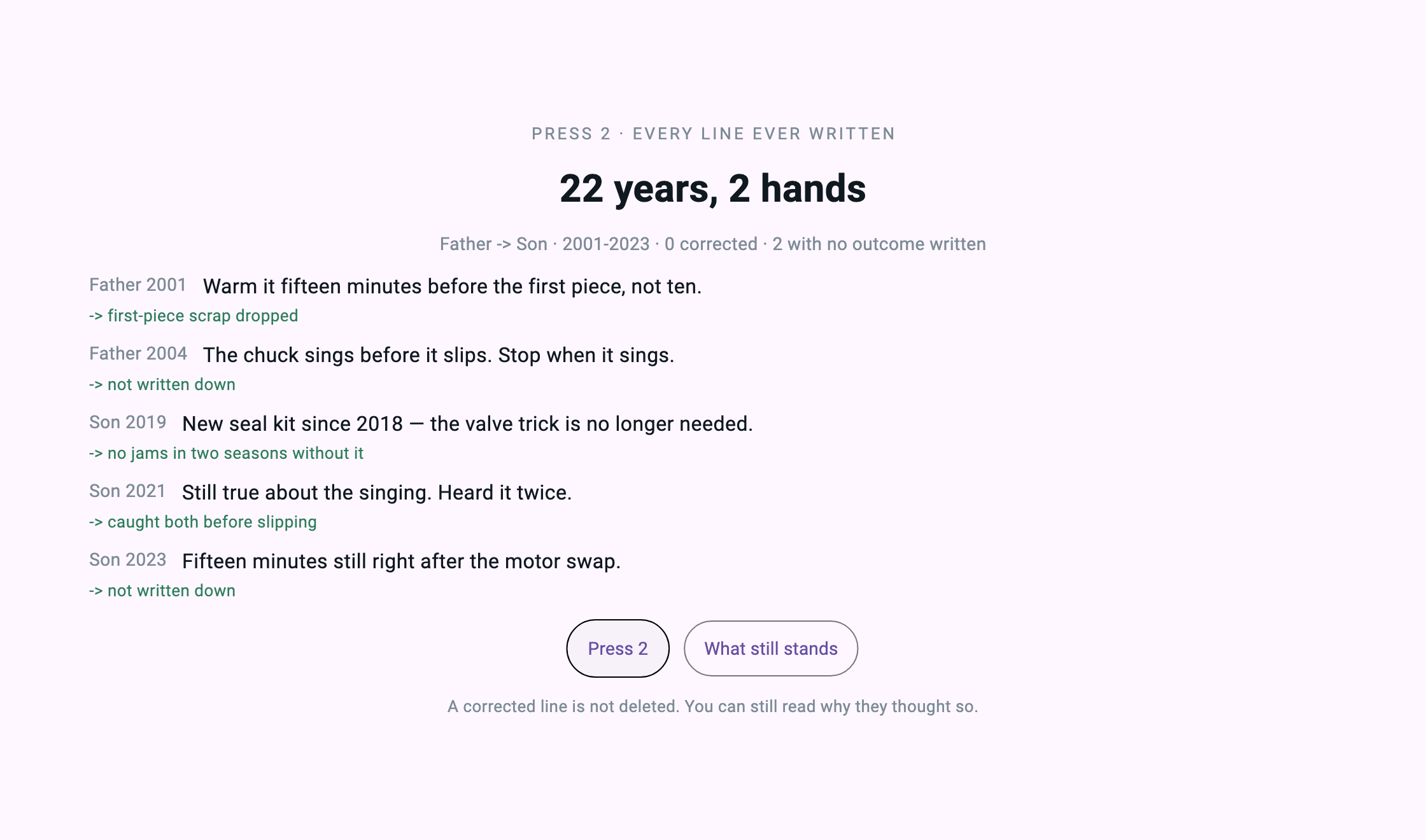
ログがその関係をそのまま言う。
standing: #2 Father 2001, #3 Father 2004, #4 Son 2019, #5 Son 2021, #6 Son 2023
corrected line #1 is absent here but still present above
1番の行はここになく、上の画面にはある。 そして画面の下にそう書いてある — "Corrected lines are hidden here, not gone."
検証が両方を見る。
grep -q "back the third valve off half a turn.*\[corrected by Son 2019" captures/run.log \
  || { echo "   a corrected line lost either its text or its correction"; exit 1; }
grep -q "corrected line #1 is absent here but still present above" captures/run.log \
  || { echo "   the corrected line was not hidden from the standing view"; exit 1; }