This piece has an evidence version. The same subject was made again, with running code and screens that were actually rendered — Nothing Is Overwritten — What an Inherited Notebook Needs to Be Useful. This one is left as it was written.
The autumn his father passed away, Do-jin was clearing out the shed when he found a stack of notebooks. A whole shelf of them, each cover marked with a year. He counted: forty-two. The oldest, marked 1983 on its cover, had paper gone yellow with age; the most recent was the one his father, Han Seok-gyu, had written in until his last spring. Do-jin had not even known they were there. His father had never once spoken of these notebooks. All that remained in memory was the sight of his back each evening, writing something at the kitchen table after coming home from the field. Under the fluorescent light, that hand wetting the pencil tip to sharpen it.
When he opened them, he found forty years of what his father had recorded about the hillside field in Bonghwa. Pencil on lined paper, some lines smudged by soil-stained hands. Dates, the weather of the day, what was planted and when it was harvested, what pests had come. Most were dry records. April 3, moved the tomatoes in the upper field. Clear. But in certain years, a single line of pain slipped in. 1997, poor harvest. Beside it, small — "Moved them too early this year." And in 2009, "The rains were long. Next time, drainage first." In 2016, "Late frost in the upper field. Lower field fine. Why?" Regret and resolve and unanswered questions, one line each, forty years' worth.
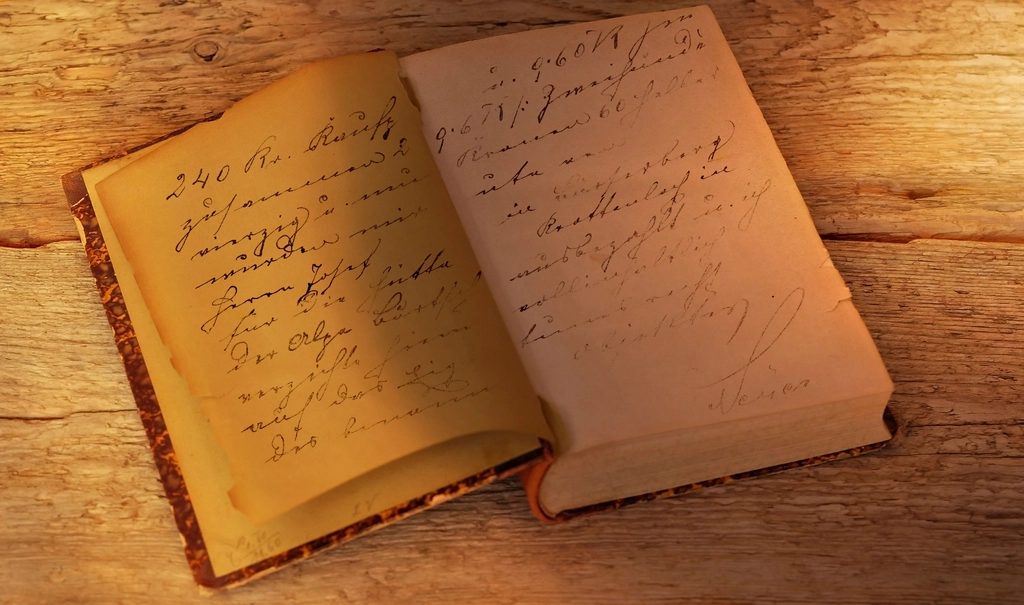
Among them were lines that had nothing to do with farming. The day Do-jin left for the army. Rain. Heavy rain, the bridge washed out. To his father, the notebook was at once a logbook, a calendar, and a diary no one had ever seen. It took three days to turn through all forty-two, and over those three days Do-jin came to know who his father had been better than he ever had while the man was alive.
Do-jin stared at the notebooks for a long while. Everything his father had learned over a lifetime was in there. It felt close enough to touch. And yet — he could not reach it.
The Inheritance Out of Reach
The problem revealed itself each time Do-jin tried to use the notebook. Having taken over the hillside field from his father, he often got stuck. When he wondered, "When did Father move the tomatoes, this time the year before last?" he had to pull the notebook marked 2024 from the shelf and turn it page by page. He would carry the faint pencil writing to the bright light by the window and study it for a long time. Some notes did not say whether they meant the upper field or the lower, so he had to guess from the surrounding context. On a hillside field, the sun on the upper and lower plots differed by half a day. Over that one thing alone he would hesitate for ages. A wrong guess meant throwing away a whole season.
What frustrated him more was that "moved them too early," repeated in every poor-harvest year. 1997, 2003, 2016 — his father had clearly known something. Some years he moved them early and they were fine; other years he moved them just as early and lost the crop. That difference his father knew by feel. The air of some spring morning, the dampness of the soil, the snow still lingering on the distant ridge — gathering all of it, he knew "this year, wait a little longer." The villagers called it "Seok-gyu's instinct." But what that instinct was connected to was written nowhere in the notebooks. To his father it was something the body knew, something there was no need to write down.
Do-jin wanted to find that connection. If he laid out all forty-two notebooks, picked the poor-harvest years, and set that spring's records side by side to compare, perhaps it would show. He actually tried once. He stacked all forty-two notebooks on the table, found the seven years marked as poor harvests, and began copying out the March weather records for those years. But after three days it collapsed. The writing was faint, and the format differed year to year — in 1988 it said only "chilly morning," while in 2011 there were numbers like "4 above zero." Whether "chilly" meant 4 degrees or 6, what to compare against what — even that was blurred. The forty years of experience were clearly all there on that shelf, yet Do-jin could not ask them anything. The experience was present, but it was an inheritance out of reach.
Only then did he realize. Had his father been alive, this was something he could simply have asked. "Father, can I move them this year?" One question, and his father would have stepped into the yard, looked once at the sky, touched the soil once, and said, "Wait three more days." Forty-two notebooks were compressed into that one sentence. Now there was no one to say it, and the notebook could not say it for him. The notebook recorded the facts, but it could not record the person who read the facts aloud. What Do-jin needed was not the notebook, but something that, when asked, would answer like his father.
Moving It Over — A Long Winter
Do-jin is not a developer. The only thing he ever did on a computer was occasionally look up market prices. What he did was not grand. He simply moved the notebook's columns onto a screen — date, field (upper/lower), crop, task, morning temperature, and that one line of notes his father always wrote.
Which columns there should be, he learned by reading the forty-two notebooks. What his father had thought important enough to record and what he had left out — that became the columns. Instead of words like "chilly," weather became a morning temperature number — so it could be compared. The field always had to be marked upper or lower — so nothing had to be guessed. In a poor-harvest year, instead of just "poor harvest," he would record what exactly was lost. Deciding those columns was eight-tenths of what he did. They were columns only someone who had lived thirty years on that hillside field could decide. Do-jin merely told the screen those columns. He did not write code; he decided what should go where. And then those columns became a place where each new record stacked up, always in the same shape.
And then he began copying his father's old notebooks, page by page, into those same columns. Deciphering the faint writing, guessing upper field or lower, ordering the once-jumbled formats into a single shape. "Chilly morning" he converted into numbers by cross-checking the township office's records for the same year. All winter, every evening, at the kitchen table, just as his father had. It took a season for forty years to become one shape. It was a long winter. Peering at the faint writing, he often thought about the state of mind in which his father had written each line. When he copied the "moved them too early" beside the 1997 poor harvest, his father's shoulders that spring came back to him, and he stopped his hand for a long while.
And when spring came, he began recording his own farming in the same columns too. At the place his father had stopped, splicing in his own lines. The forty-third volume was not paper but a screen.
This content requires Developer or above
Sign in and upgrade your plan to continue reading.
View Plans